
Toddlers and Dogs
Building safe, respectful relationships
Dogs and toddlers can develop wonderful relationships, but safety must always come first. Toddlers are still learning impulse control, while dogs communicate through body language that is often misunderstood.
Our responsibility is to protect both the child and the dog. Never expect a dog to tolerate behaviour that makes it uncomfortable.
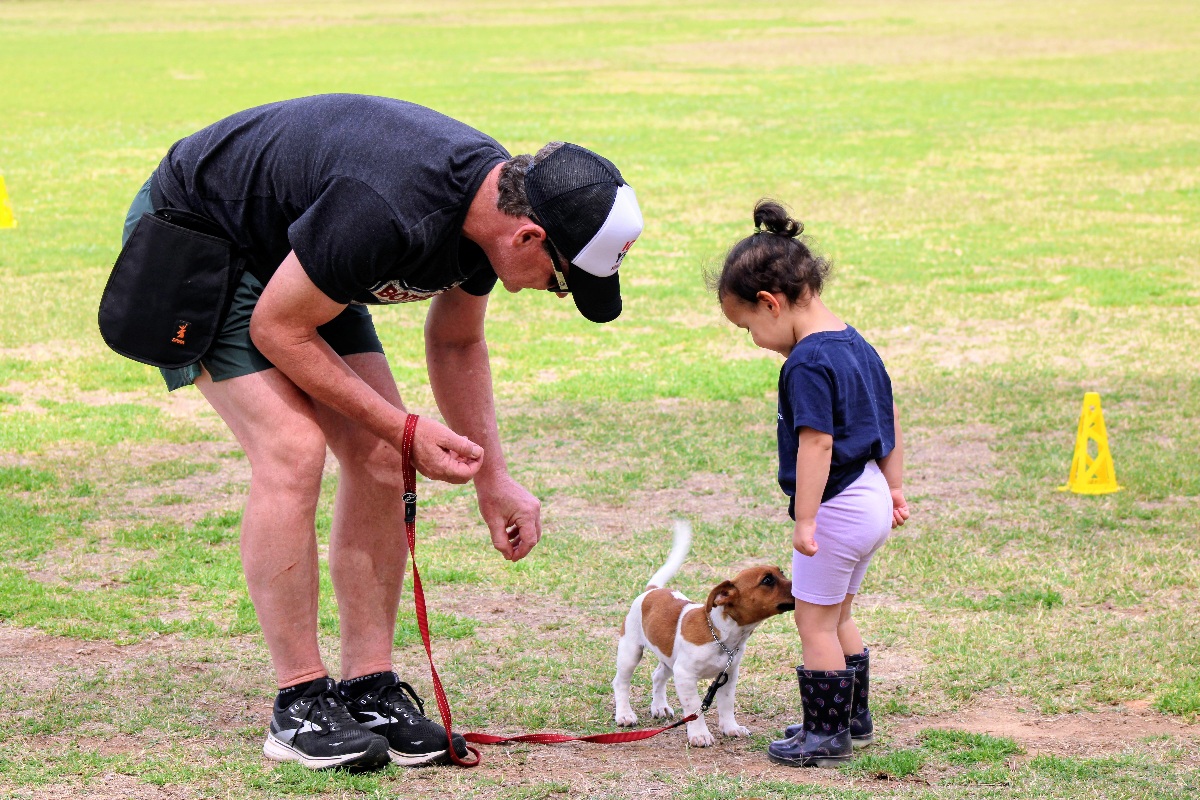
1. Supervision is essential
- Never leave a toddler alone with a dog, regardless of the dog's temperament, training or history.
- Actively supervise every interaction. Stay close enough to intervene immediately.
- If you cannot give the interaction your full attention, separate the dog and child using a secure barrier.
- Remember that even a familiar, gentle dog can react when frightened, hurt or overwhelmed.
2. Teach toddlers to be gentle
- Encourage calm movements and gentle hands.
- Never allow hugging, climbing, squeezing, grabbing, hitting or pulling ears and tails.
- Keep faces away from the dog's face. No kissing or putting faces close together.
- Never allow a toddler to chase, corner or follow a dog that is moving away.
- Let the dog choose whether to approach. Never force an interaction.
- Remember that toddlers cannot be expected to consistently follow these rules. Adults must manage the interaction.
3. Give dogs space
Dogs need time and space to rest without being disturbed.
Always separate toddlers from dogs when the dog is:
- Eating or chewing a bone or high-value treat.
- Sleeping, resting or in its bed or crate.
- Unwell, injured, frightened or stressed.
- Playing with valued toys or guarding an item.
- Overexcited or struggling to settle.
Provide a secure, child-free resting area where the dog can relax without being followed or disturbed.
4. Learn to recognise stress
Dogs communicate discomfort in different ways. Some signs are subtle, and not all dogs will growl before reacting.
Watch for:
- Turning the head away or avoiding interaction.
- Repeated lip licking or yawning when not tired.
- Ears held back, a tucked tail or showing the whites of the eyes.
- A tense body, freezing or suddenly becoming very still.
- Moving away, hiding or attempting to escape.
If you notice these signs, calmly stop the interaction and create distance.
A wagging tail does not automatically mean a dog is happy or wants to be touched.
5. Don't rely on the dog to walk away
- Some dogs freeze rather than move away when uncomfortable.
- Some dogs tolerate handling until they reach their limit.
- Toddlers may follow a dog that is trying to escape.
- Adults must actively create space and prevent unwanted interactions.
A dog that remains still is not necessarily a dog that is comfortable.
6. Keep interactions calm and positive
- Keep interactions short and allow the dog regular breaks.
- Avoid rough play, wrestling, chasing and face-to-face games.
- Never allow toddlers to take food, bones or toys from a dog.
- If involving a toddler in training, have an adult manage the dog and rewards.
- Reward calm behaviour and teach children to admire dogs without always needing to touch them.
7. Respect the individual dog
Every dog is different. Age, health, previous experiences, temperament and the situation can all influence how a dog responds.
Never assume a dog is safe with toddlers simply because it has been gentle in the past. Equally, a dog should not be placed in situations where it is expected to continually tolerate uncomfortable handling.
If a dog shows repeated discomfort around children, seek guidance from a professional.
The most important message
A safe relationship is built on choice, space and supervision — not on expecting a dog to tolerate everything a toddler does.
Adults are responsible for teaching children, recognising canine communication and preventing situations where either the child or the dog feels unsafe.
Protect the child. Protect the dog. Respect both.